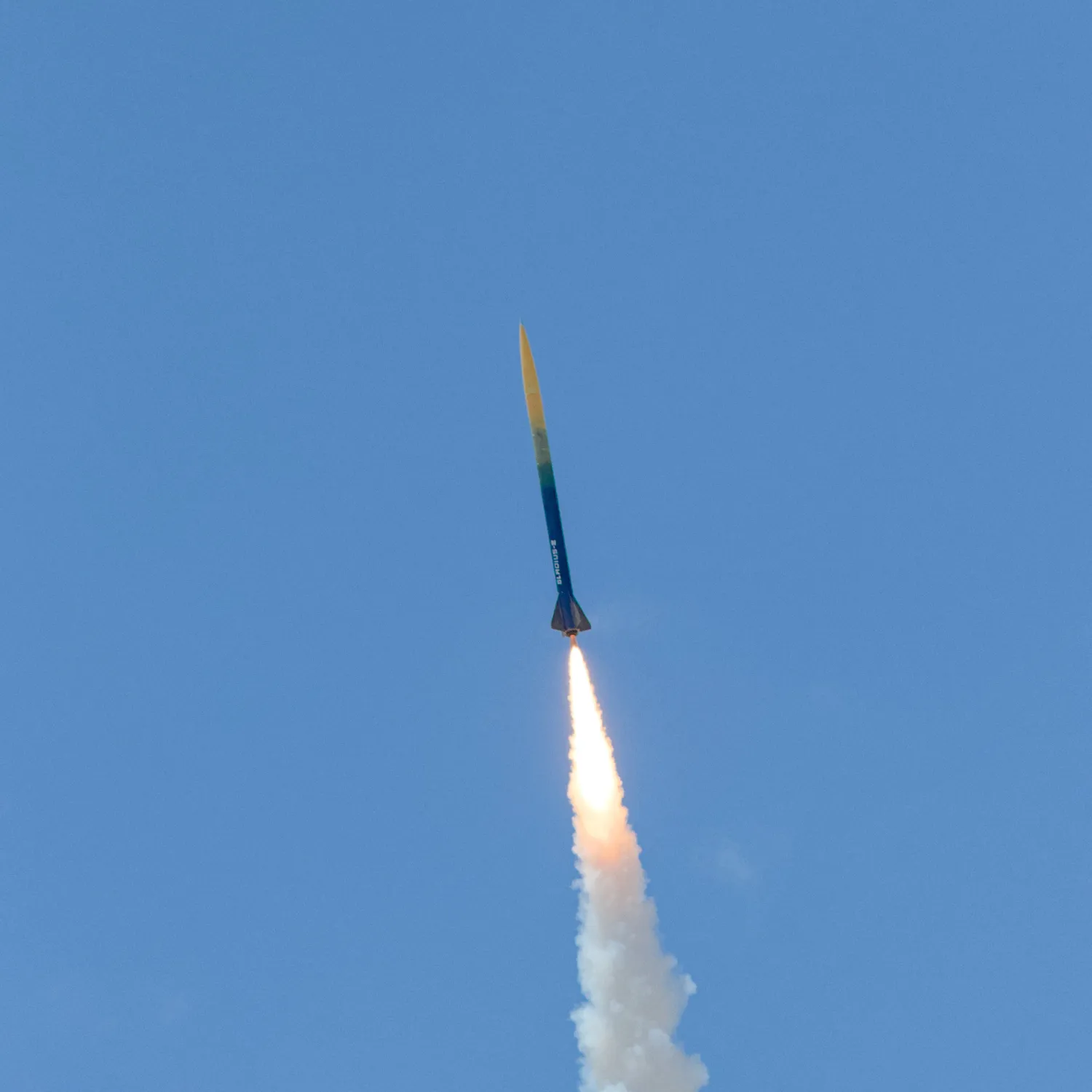
Overview
Took MARC from back-to-back recovery failures (Gladius I and II) to a national-record-breaking flight. Personally led epoxy prep, designed cap-style centering rings to eliminate shear stress, extended shock cords with double fisherman knots, and integrated the water ballast system at competition. Without the structural and recovery fixes, Gladius III would have failed recovery and Harvey Mudd wouldn't have placed.
99.95%accuracy. 17,172 ft vs 17,181 ft target. Most accurate rocket in competition history.
3rdnational placement at FAR-Unlimited 2025
Photo Gallery
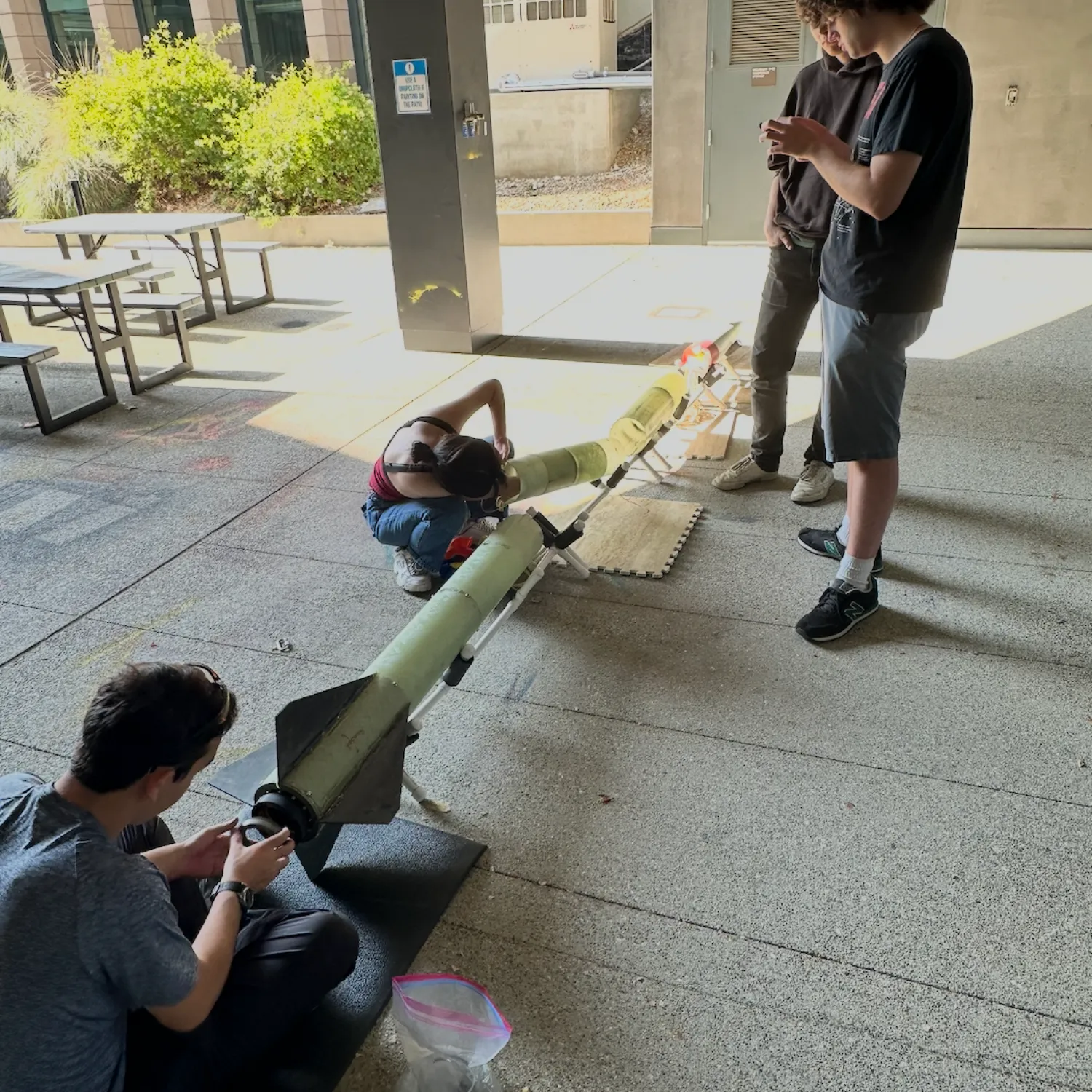
working on the rocket
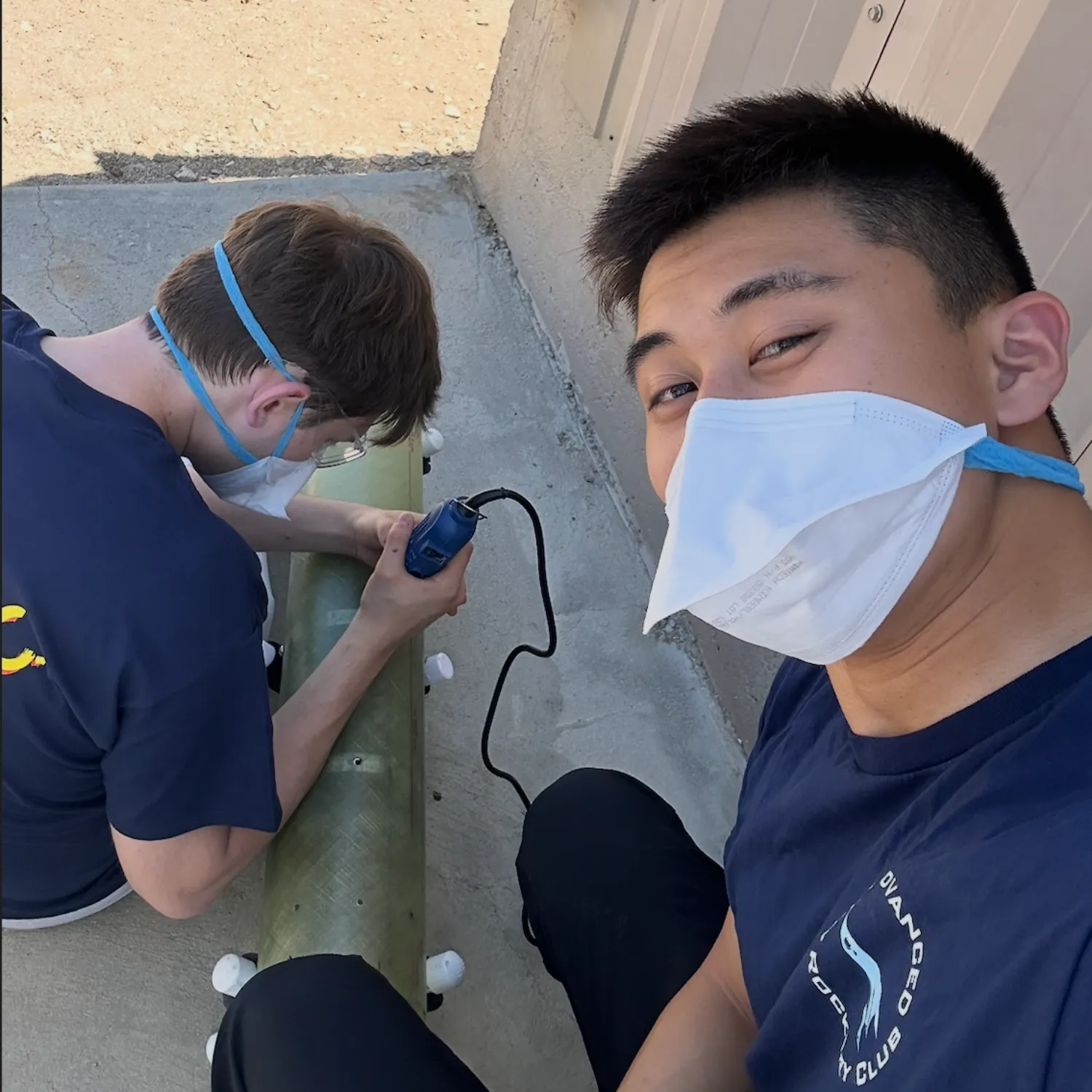
working on the rocket
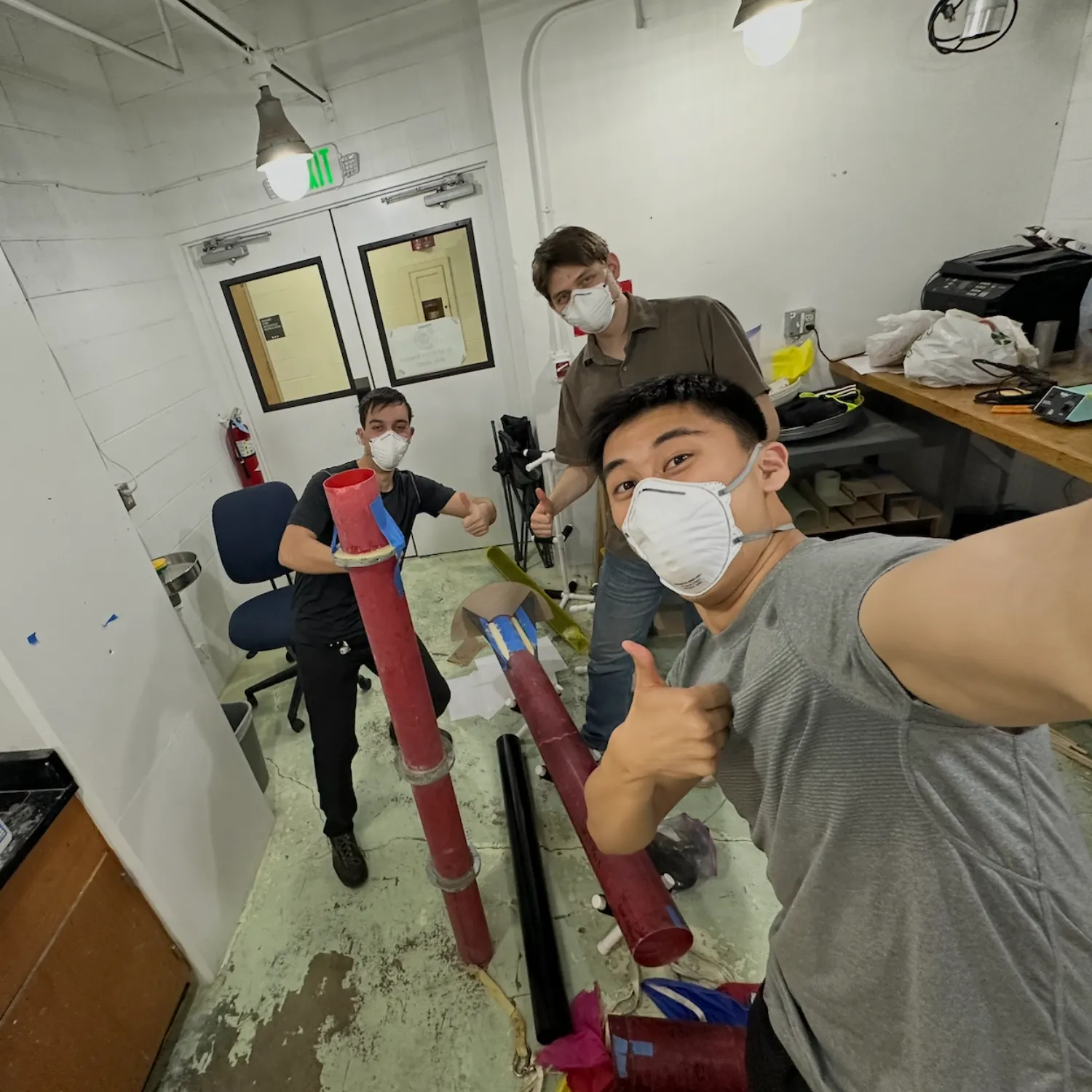
working on the rocket
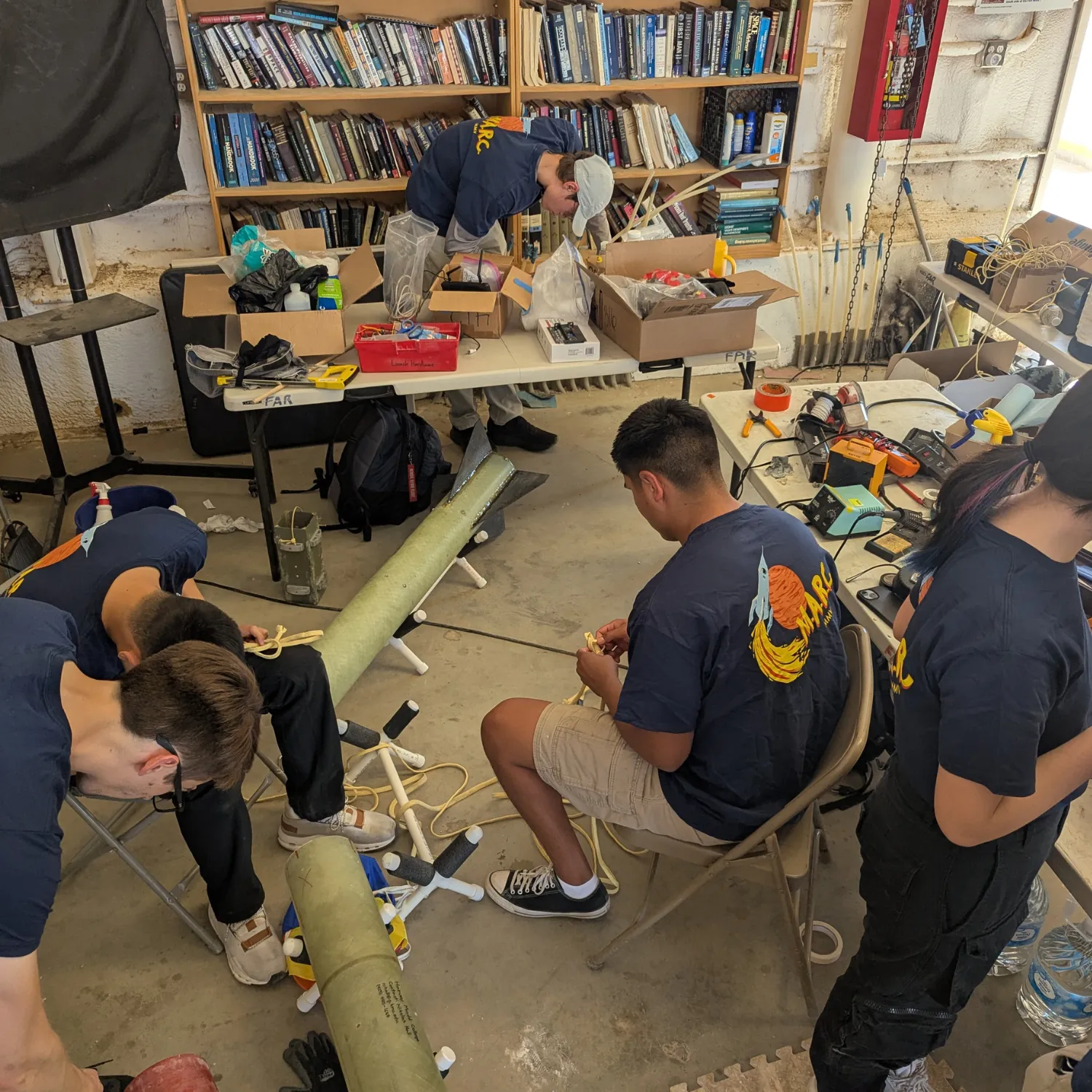
working on the rocket
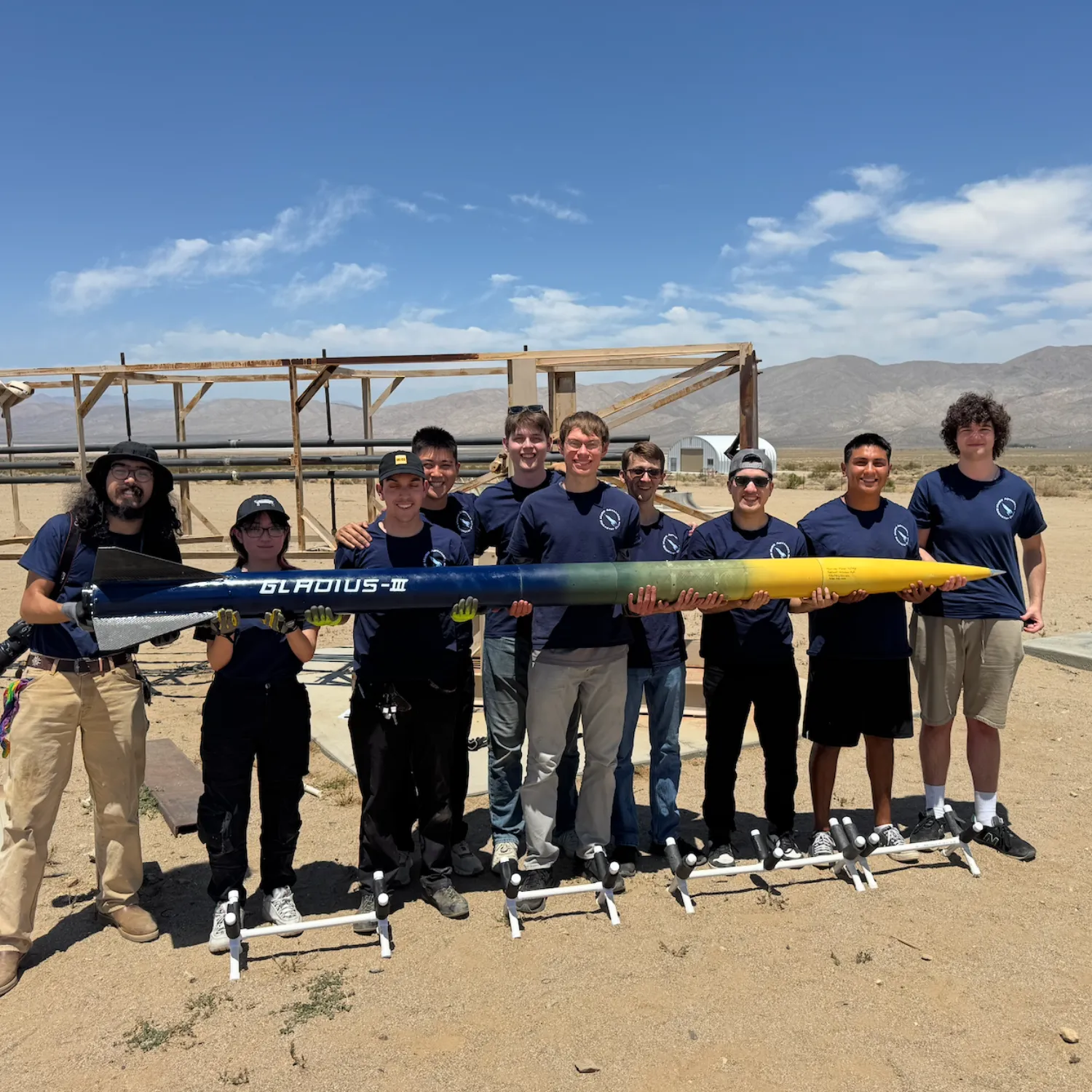
MARC team
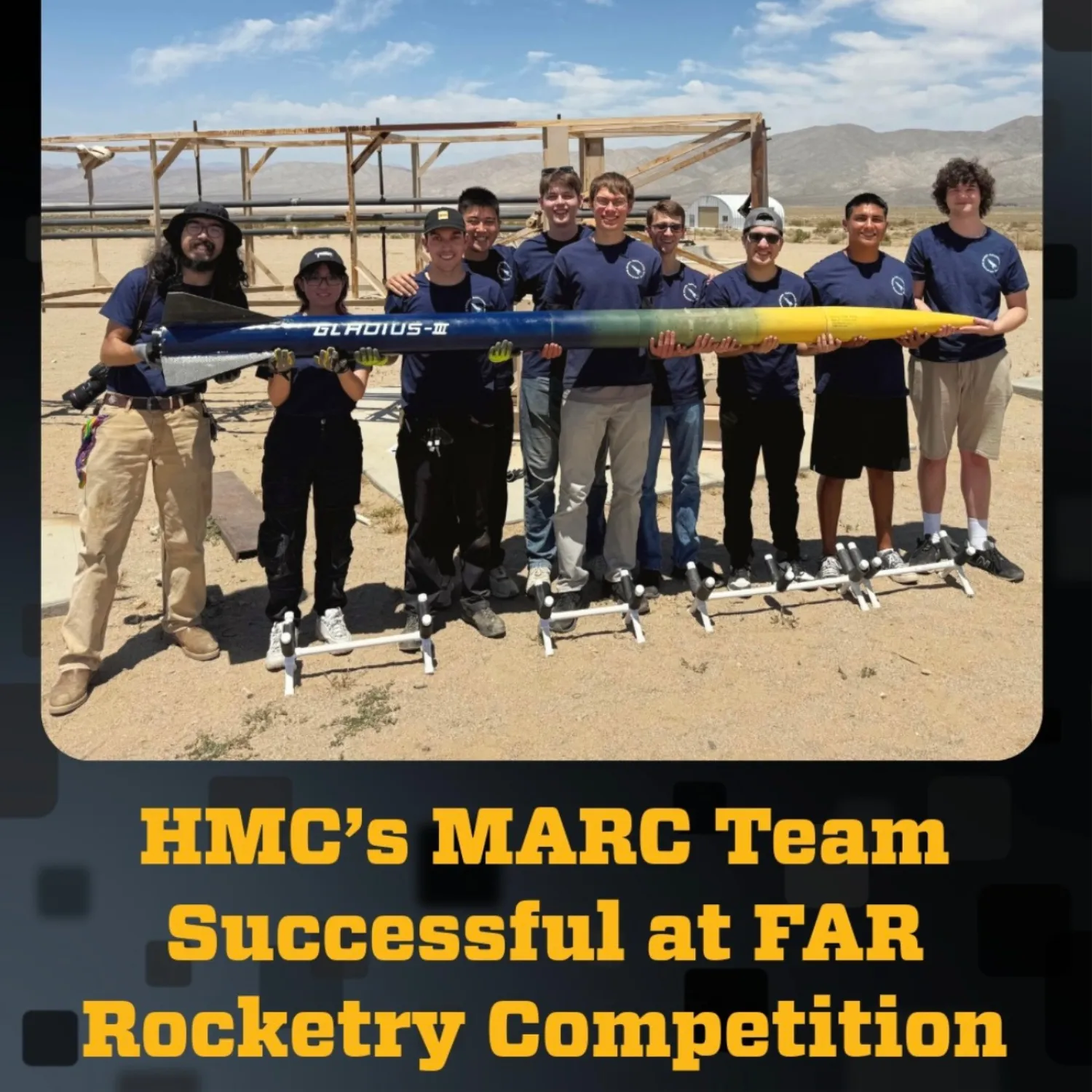
featured on Harvey Mudd College news
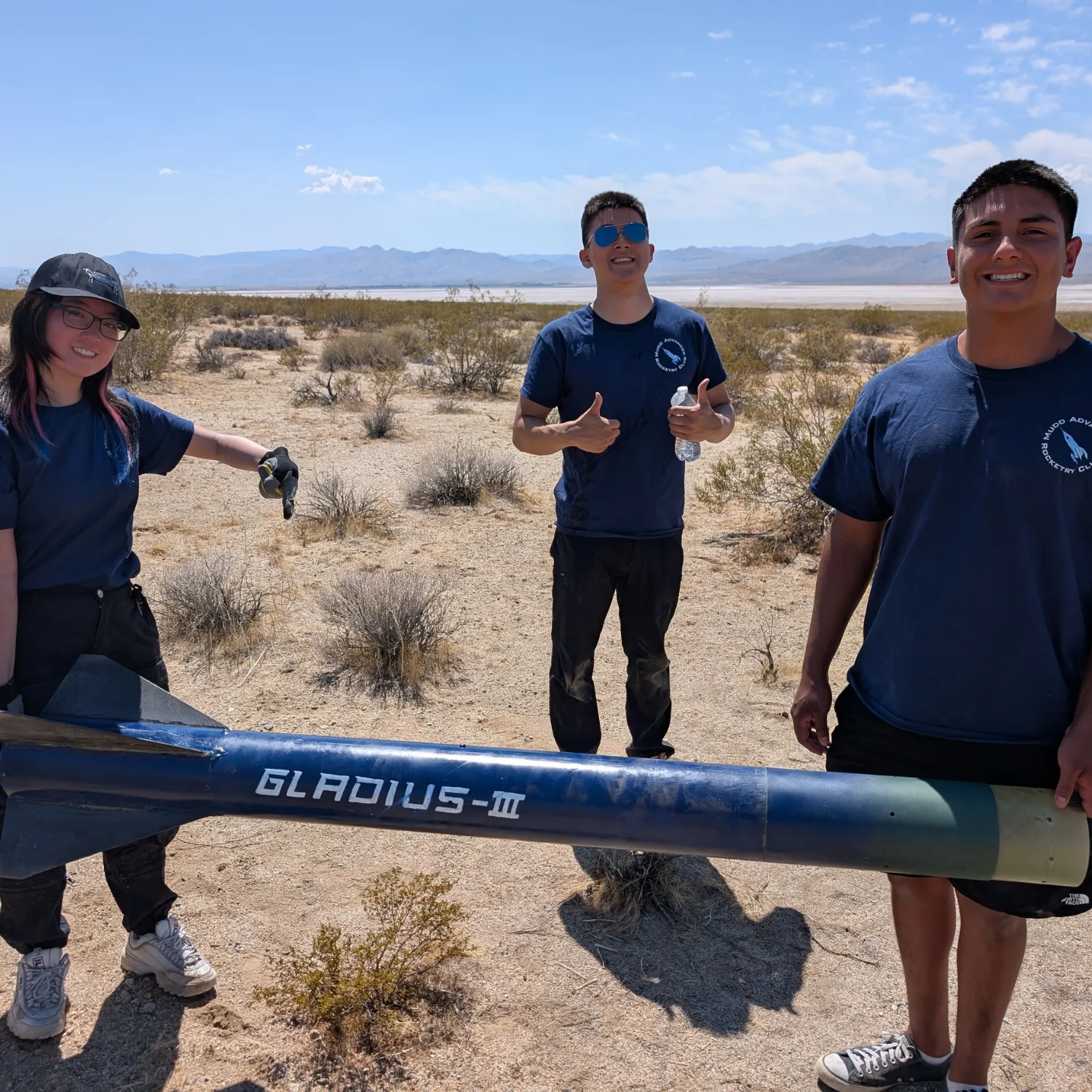
full recovery of Gladius III
What I built
- Cap-style centering rings. Eliminated shear stress points by avoiding holes drilled into the main airframe. Distributed load across the full circumference.
- Extended shock cords with double fisherman knots. Tripled rocket length to prevent structural failure during chute deployment, last year's failure mode.
- Water ballast system with constrictor knot detachment. Built and secured on-site at competition, balancing stability with safety under time pressure.
- Standardized epoxy protocols. Multi-stage mixing and curing, surface prep with sanding and solvent. Prior rockets' bond failures came from inconsistent epoxy work; we shipped a process.
Rocket specs
- 11 ft tall, 70 lb at liftoff
- Aerotech N1000W motor (N-class, 14,126 Ns impulse)
- Dual parachute recovery with CO₂ ejection charges (drogue at apogee ~17,180 ft, main at 500 ft)
- Scientific payload comparing 5-min vs. 24-hr epoxy adhesive strength
- OpenRocket for flight sims; SolidWorks FEA for structural loads; Aeropoxy + Proline 4500 for bonding